
Student Health & Safety: The Staff Perspective

Student health and safety should never be treated as something separate from the competitive or educational process. It is part of the process. A program cannot perform at a high level if students are physically unsafe, emotionally overwhelmed, unclear about expectations, or placed in situations where preparation and supervision are not being taken seriously.
From the staff perspective, student safety is not just about reacting when something goes wrong. It is about planning ahead, communicating clearly, knowing your responsibilities, and creating an environment where students can rehearse, perform, travel, and compete with confidence.
At FMBC, the expectation is simple: student safety comes first. The performance matters, the score matters, and the season matters, but none of those things matter more than the well-being of the students participating in the activity.
Safety Starts Before the First Rehearsal
As a staff member, you should not wait until a problem happens to think about safety. You should have a plan before students are placed in demanding rehearsal or performance conditions.
That means understanding your school’s policies, district requirements, medical procedures, parent communication systems, emergency contacts, transportation expectations, and supervision responsibilities. You should know who has access to student medical information, who is authorized to respond in an emergency, who communicates with parents, and who contacts event or emergency personnel if needed.
This is especially important because marching band combines physical activity, outdoor rehearsal, equipment movement, travel, long performance days, and large groups of students. The National Athletic Trainers’ Association specifically identifies marching band members as performing athletes and recommends written emergency action plans, monitoring students for heat illness, and preparing students for the physical demands of the activity.
You do not need to make safety complicated, but you do need to make it intentional. If the plan only exists in someone’s head, it is not strong enough.
Have an Emergency Action Plan and Know How to Use It
Every staff member shouldstaff should know the emergency plan before rehearsal or performance day begins. It is not enough for the director alone to know what to do.
As a staff member, you should know where emergency equipment is located, who contacts emergency services, who meets medical responders, who supervises the rest of the ensemble, and how communication moves between staff, school administration, parents, and event personnel.
A strong emergency plan should account for heat illness, sudden cardiac events, severe weather, injuries, medical emergencies, and transportation issues. NFHS guidance emphasizes that emergency action plans should be venue-specific, reviewed, and rehearsed so staff members know how to respond instead of trying to figure it out during the emergency itself.
You should also understand your role if you are not the person providing direct care. In many situations, the safest thing you can do is clear space, keep students calm, locate the appropriate personnel, communicate clearly, and prevent confusion.
An emergency is not the time for every adult to improvise. It is timeis the time to follow the plan.
Take Heat, Hydration, and Weather Seriously

For many programs, especially in Florida, heat is one of the most consistent safety concerns of the season. You should treat heat management as a normal part of rehearsal planning, not as an inconvenience.
As a staff member, you can help by planning water breaks, monitoring student behavior, adjusting rehearsal intensity, paying attention to weather conditions, and recognizing when students are struggling. You should not wait until a student is clearly in distress before making adjustments.
The CDC notes that muscle cramping may be an early sign of heat-related illness and advises caution when exercising in hot conditions. NATA also recommends that marching band students be monitored on the field for signs of heat illness.
You should pay attention to students who appear disoriented, unusually fatigued, pale, flushed, dizzy, confused, or unable to continue safely. You should also be aware that students may hesitate to speak up because they do not want to disappoint the staff, lose their spot, or appear weak in front of peers.
That is why the staff has to set the tone.
You can make it clear that reporting a health concern is not quitting. Taking a needed break is not a lack of commitment. Asking for help is not a weakness. Students need to know that safety concerns will be taken seriously and handled respectfully.
Build Acclimation Into the Season
Students need time to adjust to the physical demands of the season. You should not assume that every student arrives prepared for long outdoor rehearsals, high temperatures, physical conditioning, carrying equipment, or repeated full-out performance reps.
As a staff member, you can help students acclimate by building intensity over time, communicating expectations early, structuring breaks responsibly, and avoiding sudden jumps in demand. This is especially important during band camp, early-season rehearsals, and the first few outdoor performance days.
You should also recognize that not all students start from the same place. Some students may be experienced performers. Others may be new to the activity. Some may have physical limitations, medical needs, or lower conditioning levels. That does not mean expectations disappear, but it does mean the staff should teach students how to meet the demands safely.
The goal is not to make rehearsal easy. The goal is to make rehearsal productive, sustainable, and safe.
Keep Students Informed About Expectations

A safer ensemble is usually a better-informed ensemble.
You should make sure students know what is expected of them before rehearsal, during rehearsal, during travel, in warmup, at the performance site, and after the show. Confusion creates risk. Students who do not know where to go, what to bring, how to move equipment, or when to report issues are more likely to make unsafe decisions.
As a staff member, you can prevent many problems by communicating clearly:
Students should know what shoes or clothing are appropriate for rehearsal.
They should know when and where water is available.
They should know how to report an injury or illness.
They should know who to go to if they feel unsafe.
They should know how equipment should be lifted, moved, loaded, and stored.
They should know what behavior is expected in the lot, stadium, bus, and warmup areas.
These details may seem basic, but they matter. Clear expectations reduce confusion and allow students to focus on performing.
Supervision Is an Active Responsibility
Student supervision is not passive. It is not just being present in the same general area as students.
As a staff member, you should be aware of where students are, what they are doing, who is responsible for them, and whether the environment is safe. This matters during rehearsal, but it also matters during meals, bus loading, bathroom breaks, warmups, equipment movement, and downtime at events.
Many issues happen when students are between activities, not during the most structured parts of the day. Downtime can create gaps in supervision if the staff does not plan for it.
You can help by making sure students move in groups when appropriate, know check-in expectations, understand boundaries at performance sites, and have clear instructions during transitions. You should also avoid assuming that “someone else is watching them” unless responsibilities have actually been assigned.
If everyone assumes someone else has it covered, no one really does.
Equipment Safety Matters

Marching band involves a lot of equipment: instruments, props, electronics, podiums, carts, front ensemble equipment, sound systems, uniform racks, flags, rifles, sabres, and more. All of it needs to be handled with care.
As a staff member, you should teach students how to move equipment safely instead of assuming they already know. That includes lifting with help when needed, securing items during transport, watching for uneven surfaces, keeping pathways clear, and avoiding rushed movement near other students or spectators.
You should also make sure equipment is inspected regularly. Broken wheels, unstable props, loose hardware, exposed cables, overloaded carts, and poorly secured electronics can create unnecessary risk. The performance environment is already busy. You do not want preventable equipment issues adding danger to the day.
Weather Decisions Should Be Clear and Timely
Outdoor activities require constant awareness of weather. Heat, lightning, heavy rain, wind, and unsafe field conditions can all affect student safety.
As a staff member, you should know who is responsible for monitoring weather and who has the authority to pause, move, or cancel activity. Students should not be left guessing whether rehearsal continues during unsafe conditions.
You should also be careful about the pressure to “push through” weather concerns. There is a difference between rehearsing through discomfort and ignoring legitimate risk. When conditions become unsafe, the responsible decision is to adjust.
Clear weather procedures help protect students and reduce confusion. They also show students that the staff is making decisions based on safety, not emotion or competitive pressure.
Emotional Safety Is Part of Student Safety
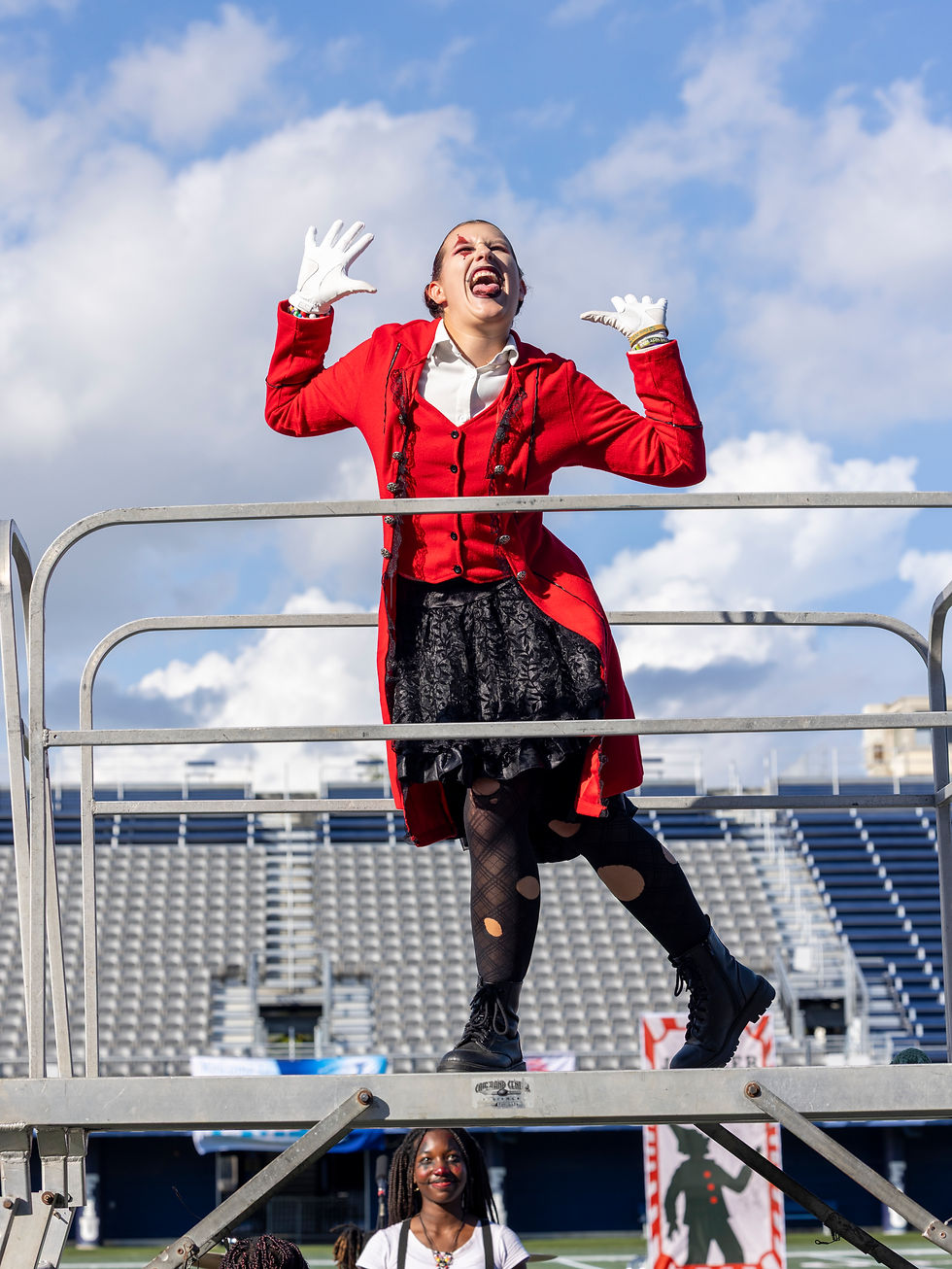
Student health and safety is not only physical. The emotional environment of the program matters as well. As a staff member, you are responsible for maintaining a rehearsal culture that is demanding without being harmful. High standards are appropriate. Accountability is appropriate. Direct correction is appropriate. Humiliation, intimidation, personal attacks, and public embarrassment are not.
Students should feel challenged, but they should not feel unsafe. They should understand that mistakes are part of the learning process, not a reason to be demeaned. They should know that staff members are there to teach, not to perform frustration in front of the ensemble.
You can create a healthier environment by correcting behavior and performance issues clearly, keeping feedback focused on the task, and avoiding language that attacks a student’s character. The way staff members communicate under pressure becomes part of the culture of the program.
Students can handle high expectations when those expectations are delivered with clarity, consistency, and respect.
Know When to Stop a Student
There will be times when a student wants to continue, but continuing is not the safest choice. As a staff member, you should be willing to remove a student from activity when there is a legitimate concern. That may involve illness, injury, heat symptoms, emotional distress, unsafe equipment use, or a situation where the student cannot continue without increasing risk.
This can be difficult in a competitive environment, especially close to performance time. However, safety decisions should not be based on whether the student is needed in the drill or whether the show will be affected.
You can always adjust a performance. You cannot ignore a student’s well-being.
When in doubt, follow school policy, involve the appropriate medical or administrative personnel, and prioritize the student’s safety over the production.
Communicate With Parents and Guardians Professionally
Parents and guardians trust the staff to make responsible decisions with their children. That trust has to be taken seriously. As a staff member, you should know how parent communication is handled in your program. Not every staff member may be authorized to contact families directly, but every staff member should understand the process.
When something happens, communication should be timely, factual, and professional. Avoid speculation. Avoid minimizing concerns. Avoid sharing private student information with people who do not need it.
You should also help parents understand expectations before problems occur. Schedules, packing lists, hydration reminders, travel details, uniform expectations, weather plans, and contact procedures can all reduce confusion and increase trust.
Strong parent communication supports student safety because it keeps everyone better prepared.
Safety Should Not Be Used as a Slogan
It is easy for programs to say that student safety matters. The real test is whether safety is reflected in daily decisions.
As a staff member, you should ask yourself:
Are students getting clear instructions?
Are breaks being planned responsibly?
Are medical concerns being taken seriously?
Are weather decisions being made appropriately?
Is equipment being moved safely?
Are students supervised during transitions and downtime?
Are staff members communicating consistently?
Are students being corrected in a way that protects their dignity?
These questions help move safety from an idea to a practice.
Our Overview
Student health and safety is one of the most important responsibilities you carry as a staff member. It affects rehearsal quality, performance readiness, student trust, parent confidence, and the overall educational value of the season.
You can help protect students by planning ahead, communicating clearly, monitoring conditions, respecting medical concerns, maintaining strong supervision, and building a culture where students feel supported as well as challenged.
The goal is not to remove difficulty from the activity. Marching band is demanding, and students should be taught to meet that demand with discipline and preparation.
The goal is to make sure the demand is managed responsibly.
A safe program is not a less competitive program. A safe program is a better-prepared program.
About Eric Levy: Currently serving as the Director of Education & Marketing for the Florida Marching Band Championships and a percussion educator, designer, adjudicator, and arts leader with more than 25 years of experience in the marching arts. His work has included teaching, designing, judging, presenting, and developing programs for marching bands, drumlines, colleges, arts organizations, and performance programs in the United States and internationally. His collegiate experience includes work with multiple colleges and universities across programs affiliated with the Big Ten, ACC, HBCU institutions, and other collegiate music and marching arts programs. In addition to his work with FMBC, Eric is active in music education, program development, leadership training, marketing, and arts administration. Through his educational work, he focuses on helping students, educators, and organizations better understand the systems, standards, leadership practices, and culture that support successful and sustainable performing arts programs.
About FMBC: The Florida Marching Band Championships is Florida’s premier marching band circuit, dedicated to showcasing excellence in musical and visual performance. Since 1998, FMBC has celebrated the talents of thousands of student musicians, providing a platform for growth, achievement, and community through the marching arts.
For media inquiries or more information, please contact: media@fmbcstate.com


Comments